




Slit-Lamp TBUT: Capture, Measure, and Track Trends With EyeStream and VisuDoc
Tear film break-up time (TBUT) is a routine part of dry eye care at the slit lamp. The finding matters—but on a traditional lamp, what you see often never reaches the chart. Follow-up may rely on notes or recall instead of the same sequence, and patients may hear about break-up without seeing it.
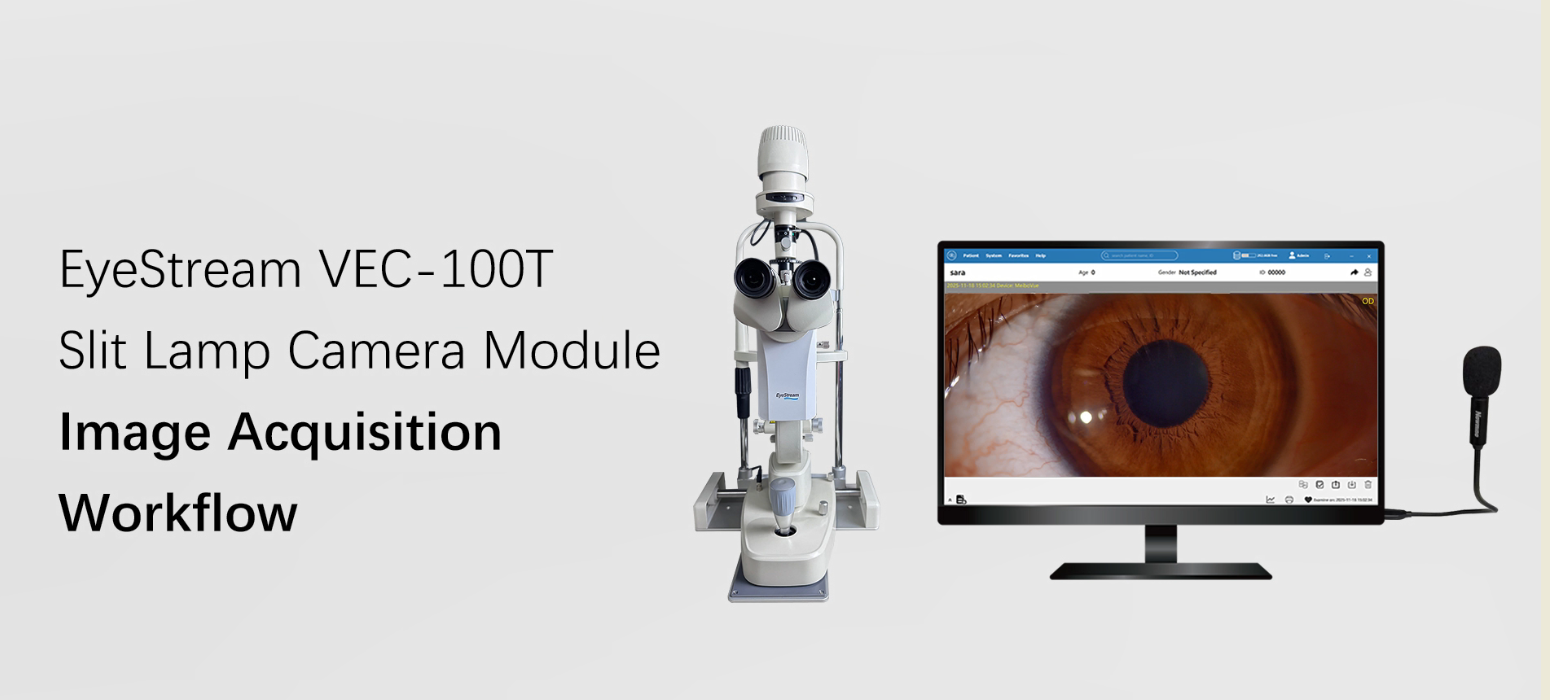
EyeStream adds photo and video to compatible slit lamps. A built-in yellow filter enhances fluorescein contrast. You keep your existing lamp; capture and review run in VisuDoc.
Capture at the Slit Lamp
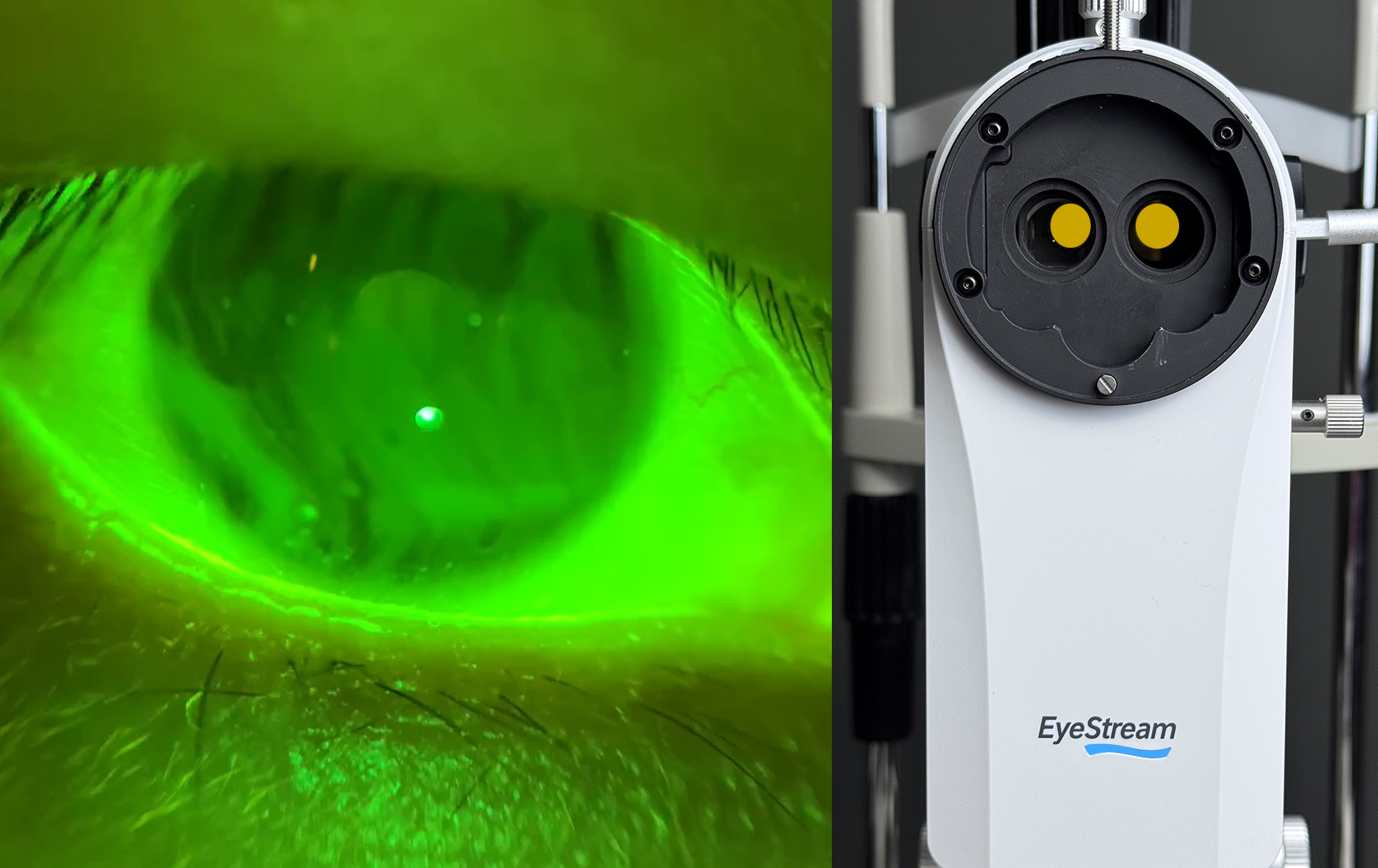
During TBUT, tear film dynamics appear in real time on the VisuDoc monitor while the patient stays at the lamp. Video saves to the open patient record—ready for replay, patient education, or visit comparison.
- Real-time TBUT preview with yellow-filter fluorescein contrast
- Compatible Haag Streit and Topcon-type lamps (3× and 5×)
Measure and Track in VisuDoc
Saved video is the starting point for structured follow-up.
1. Measure — On the video playback page, tap the timer icon to run TBUT on the clip. When measurement ends, VisuDoc logs the value to that exam.
2. Track — Repeated measurements build a longitudinal record. Select a date range to view TBUT trend curves and see how tear film stability has changed over time.
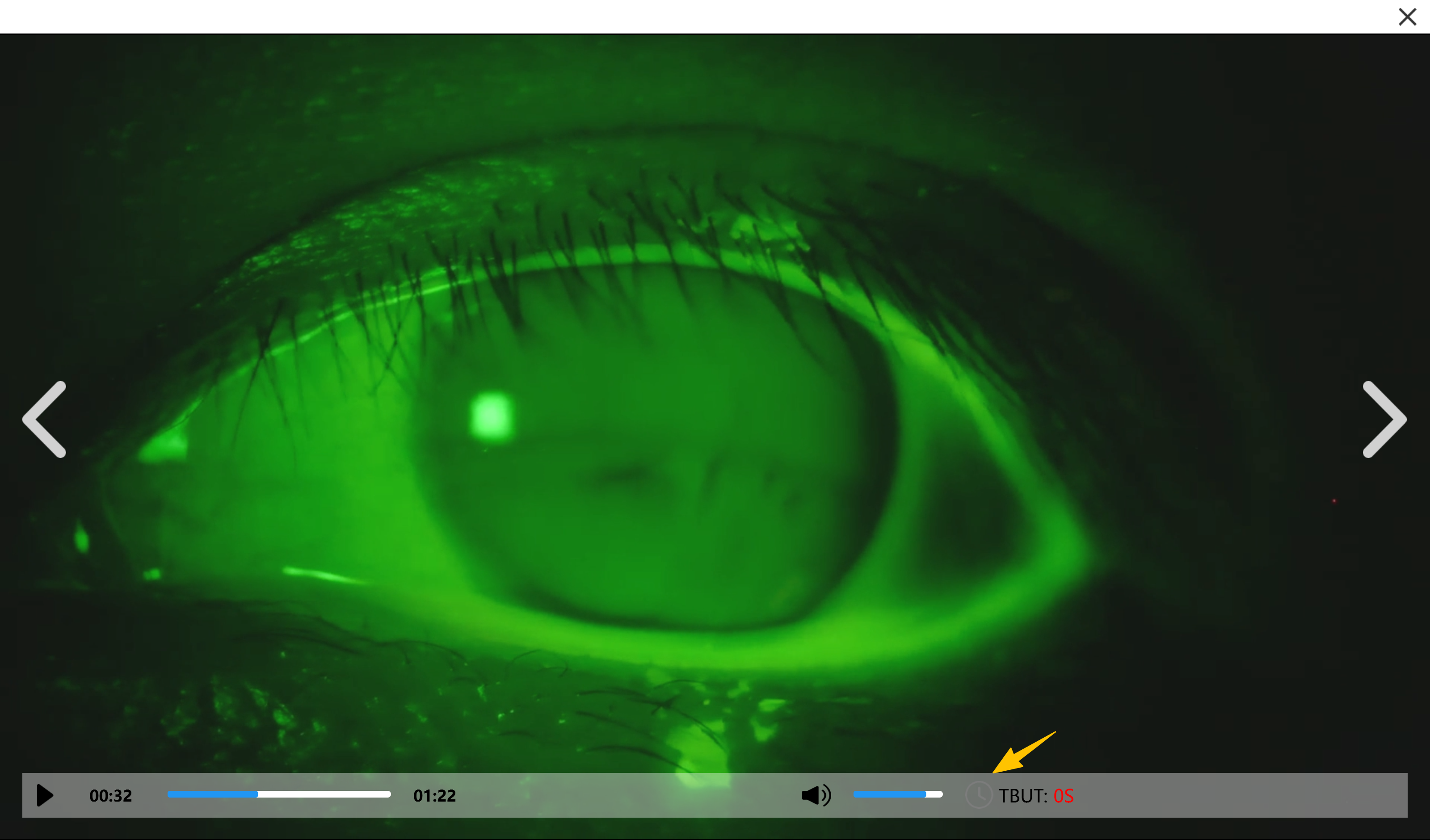
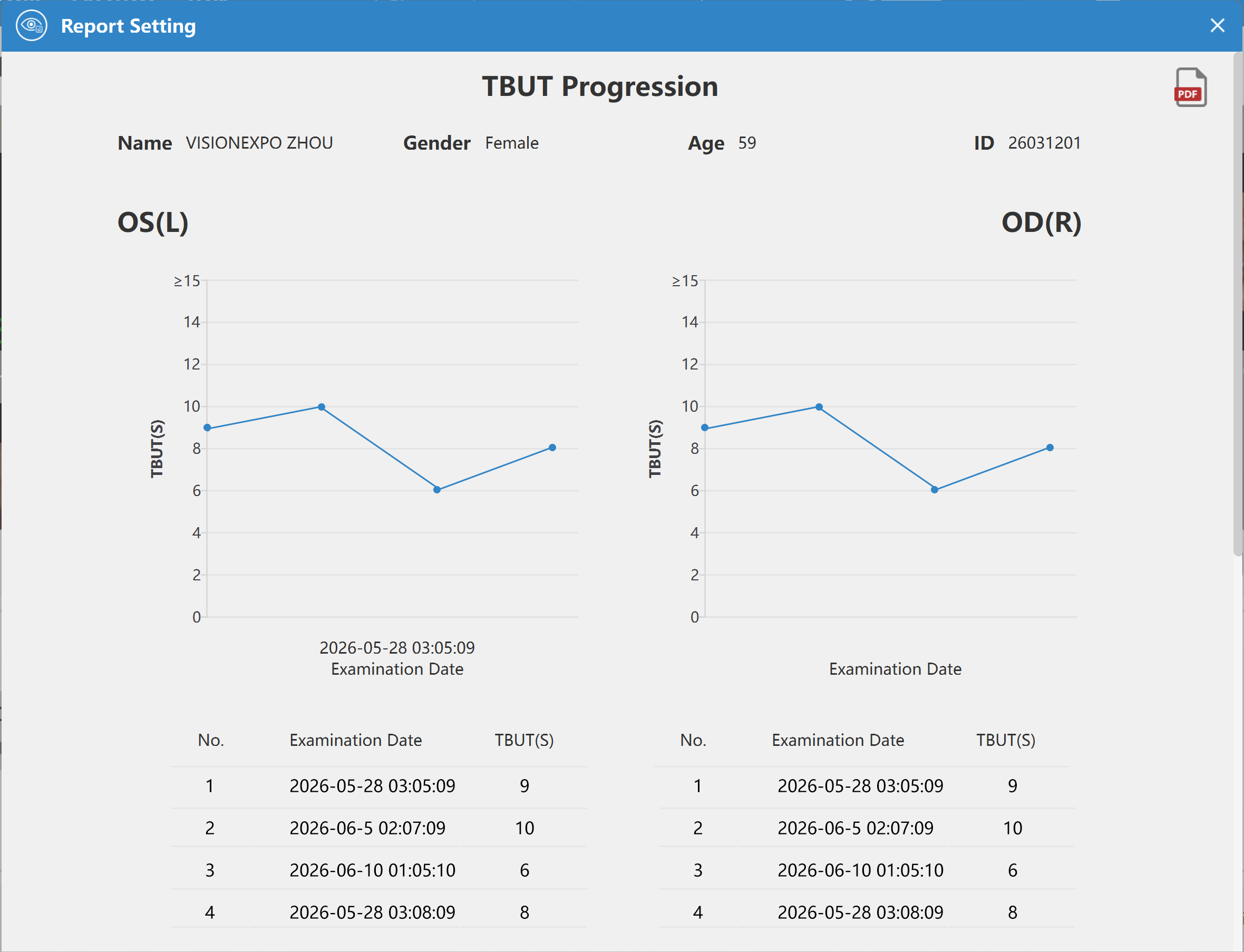
Together, stored clips and numeric trends support clearer follow-up and patient discussions—alongside meibography and other EyeStream workflows at one station.
See How EyeStream Fits Your Slit Lamp
Want the full picture before you plan your setup? Visit the EyeStream product page for compatibility, imaging modes, VisuDoc workflow, and TBUT-related features in one place.
Tear film break-up time (TBUT) is a routine part of dry eye care at the slit lamp. The finding matters—but on a traditional lamp, what you see often never reaches the chart. Follow-up may rely on notes or recall instead of the same sequence, and patients may hear about break-up without seeing it.
EyeStream adds photo and video to compatible slit lamps. A built-in yellow filter enhances fluorescein contrast. You keep your existing lamp; capture and review run in VisuDoc.
Capture at the Slit Lamp
During TBUT, tear film dynamics appear in real time on the VisuDoc monitor while the patient stays at the lamp. Video saves to the open patient record—ready for replay, patient education, or visit comparison.
- Real-time TBUT preview with yellow-filter fluorescein contrast
- Compatible Haag Streit and Topcon-type lamps (3× and 5×)
Measure and Track in VisuDoc
Saved video is the starting point for structured follow-up.
1. Measure — On the video playback page, tap the timer icon to run TBUT on the clip. When measurement ends, VisuDoc logs the value to that exam.
2. Track — Repeated measurements build a longitudinal record. Select a date range to view TBUT trend curves and see how tear film stability has changed over time.
Together, stored clips and numeric trends support clearer follow-up and patient discussions—alongside meibography and other EyeStream workflows at one station.
See How EyeStream Fits Your Slit Lamp
Want the full picture before you plan your setup? Visit the EyeStream product page for compatibility, imaging modes, VisuDoc workflow, and TBUT-related features in one place.