
Scalable Solution for Optometry Chain Practices
Scalable Solution for Optometry Chain Practices
|
For today's multi-location optometry groups, delivering consistent, high-quality dry eye services is no longer optional—it is a competitive necessity. Patients now expect advanced diagnostics, clear explanations, and personalized treatment pathways. The Dry Eye Screening Pack, powered by QuikVue and MeiboVue, was designed to help practices meet these expectations with speed, accuracy, and confidence. |
||
|
|
Core Value Proposition The screening pack combines:
Together they provide a complete dry eye assessment: tear function and gland anatomy — rather than symptom questionnaires alone. This improves diagnostic confidence and reduces missed cases. Why this matters for a multi-clinic group: |
|
|
Operational Efficiency Across a Group Both devices are designed for quick data acquisition (typically under 2–3 minutes per eye), with minimal setup and operator training.
Result: Efficient patient flow even in high-volume practices.
This reduces onboarding time for staff and ensures cross-clinic standardization without heavy investment in technician certification. |
|
|
|
|
Scalable Clinical Workflow A unified dry eye screening protocol enables:
This standardization facilitates group-wide clinical performance monitoring. If integrated into EHR, this becomes a group-wide dry eye dataset supporting:
Such data is valuable for internal quality reviews and payer negotiations. |
|
|
Improved Patient Experience and Retention Patients appreciate quick, non-invasive imaging over lengthy traditional tests (e.g., Schirmer, fluorescein breakup without imaging). This increases attendees' satisfaction and trust. Seeing real images of their own meibomian glands or tear film gives patients:
This often leads to higher treatment acceptance and compliance. |
|
|
 |
Revenue and Practice Growth Impacts Offering modern dry eye screening differentiates the group from local competitors.
This builds practice volume without additional marketing spend. Once screened, patients move into:
This extends lifetime patient value. |
|
|
Modularity and Capital Efficiency Because the pack scales from a single station in small clinics to multiple units across a group, you can:
Compared to high-end diagnostic towers or multi-modal tear labs, this pack:
|
|
|
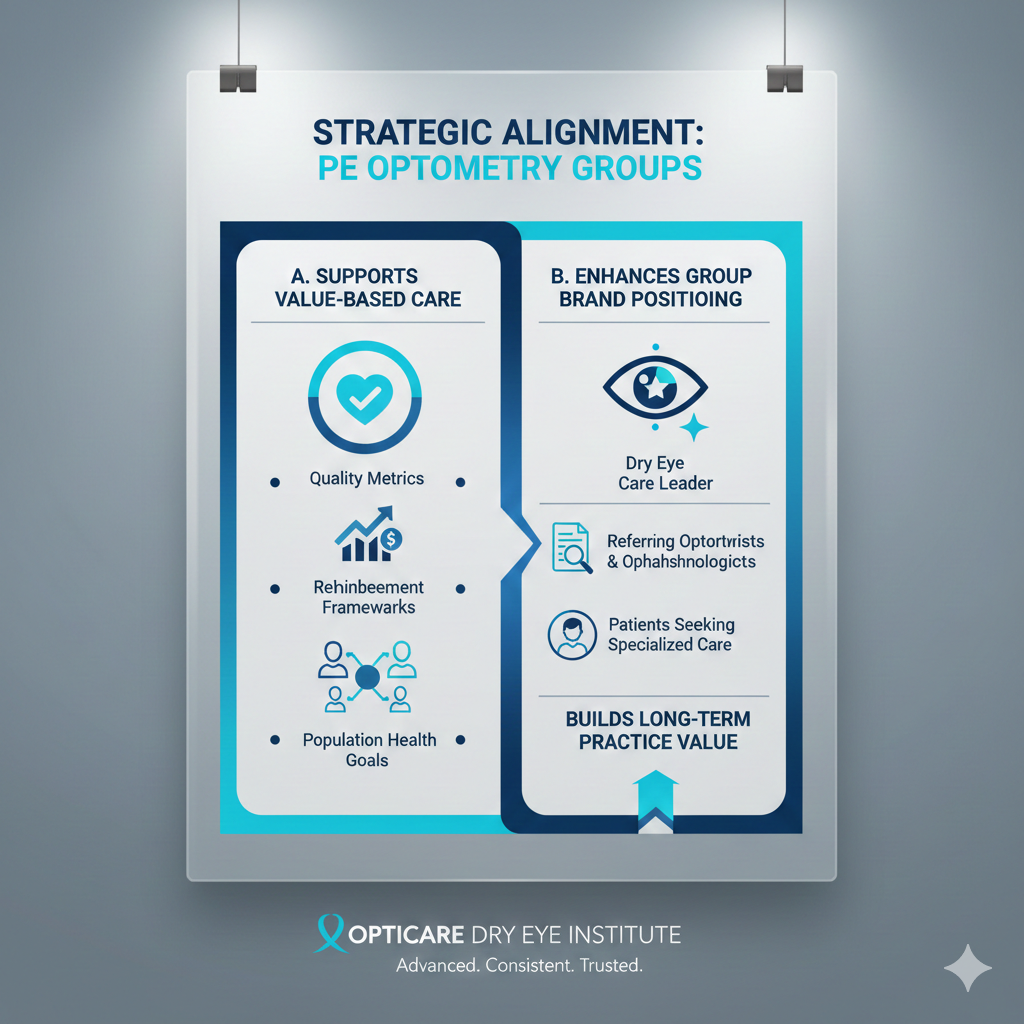 |
Strategic Alignment for PE Optometry Groups Objective screening and measurable outcomes align with:
Positioning the group as a dry eye care leader attracts:
|
|
Summary: Why This Package Works
| Dimension | Benefit for a Multi-Clinic Group |
|---|---|
| Diagnostics | Objective, consistent dry eye screening across clinics |
| Efficiency | Quick, low-training tools that fit into routine workflows |
| Patient Experience | Comfortable and visually explained diagnosis |
| Clinical Standardization | Uniform protocols for quality and data analytics |
| Revenue Growth | Referral attraction and treatment plan conversion |
For today's multi-location optometry groups, delivering consistent, high-quality dry eye services is no longer optional—it is a competitive necessity. Patients now expect advanced diagnostics, clear explanations, and personalized treatment pathways. The Dry Eye Screening Pack, powered by QuikVue and MeiboVue, was designed to help practices meet these expectations with speed, accuracy, and confidence.

Core Value Proposition
A. Comprehensive, Objective Dry Eye Screening
The screening pack combines:
Together they provide a complete dry eye assessment: tear function and gland anatomy — rather than symptom questionnaires alone. This improves diagnostic confidence and reduces missed cases.
Why this matters for a multi-clinic group:
Consistency and objectivity across locations. Providers get the same diagnostic baseline, reducing variability in clinical decisions.
Operational Efficiency Across a Group
A. Fast Throughput
Both devices are designed for quick data acquisition (typically under 2–3 minutes per eye), with minimal setup and operator training.
Result: Efficient patient flow even in high-volume practices.
B. Low Training Burden
This reduces onboarding time for staff and ensures cross-clinic standardization without heavy investment in technician certification.

Scalable Clinical Workflow
A. Standardized Protocol Across Clinics
A unified dry eye screening protocol enables:
This standardization facilitates group-wide clinical performance monitoring.
B. Data Integration for Enterprise Analytics
If integrated into EHR, this becomes a group-wide dry eye dataset supporting:
Such data is valuable for internal quality reviews and payer negotiations.

Improved Patient Experience and Retention
A. Faster, More Comfortable Screening
Patients appreciate quick, non-invasive imaging over lengthy traditional tests (e.g., Schirmer, fluorescein breakup without imaging). This increases attendees' satisfaction and trust.
B. Visual Evidence Drives Compliance
Seeing real images of their own meibomian glands or tear film gives patients:
This often leads to higher treatment acceptance and compliance.
Revenue and Practice Growth Impacts
A. Creates a Referral Engine
Offering modern dry eye screening differentiates the group from local competitors.
This builds practice volume without additional marketing spend.
B. Drives Revenue Through Care Pathways
Once screened, patients move into:
This extends lifetime patient value.

Modularity and Capital Efficiency
A. Flexible Deployment
Because the pack scales from a single station in small clinics to multiple units across a group, you can:
B. Lower Per-Clinic Cost vs Full Diagnostic Suites
Compared to high-end diagnostic towers or multi-modal tear labs, this pack:
For a group with many locations, this improves capital efficiency.
Strategic Alignment for PE Optometry Groups
A. Supports Value-Based Care
Objective screening and measurable outcomes align with:
B. Enhances Group Brand Positioning
Positioning the group as a dry eye care leader attracts:
This builds long-term practice value.
Summary: Why This Package Works
| Dimension | Benefit for a Multi-Clinic Group |
|---|---|
| Diagnostics | Objective, consistent dry eye screening across clinics |
| Efficiency | Quick, low-training tools that fit into routine workflows |
| Patient Experience | Comfortable and visually explained diagnosis |
| Clinical Standardization | Uniform protocols for quality and data analytics |
| Revenue Growth | Referral attraction and treatment plan conversion |




 CE Certified
 ISO 13485
 Global Support
Company Website
www.visuscience.com
Online Store
www.dryeyestartup.com
Content Library
https://contentlibrary.visuscience.com
Others
Contact us
Blog
Events
VisuScience Meditech co.,Ltd.
Add: Room 501, Ruiyun 5 No, 99 Furongzhongsan Rd.
Wuxi 214192, Jiangsu Province, China
Tel +86-0510-85757880
E-mail: info@visuscience.com
Follow us on