




QuikVue Vet Case Share-severe pigmentary keratitis
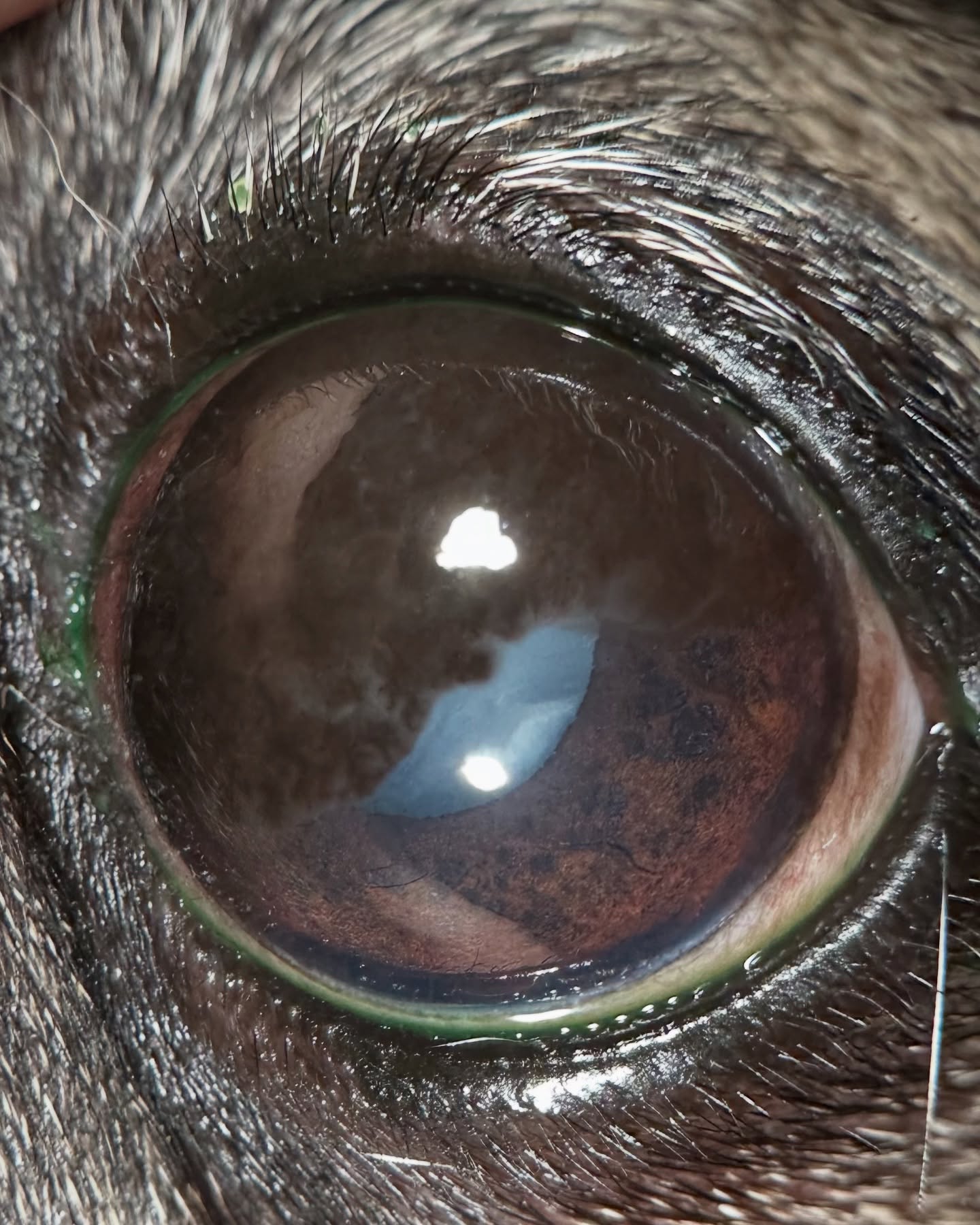
We are glad to share a vet case study captured by QuikVue eye imaging adaptor from Dr. Allison Fuchs.
This dog has a VERY severe pigmentary keratitis that has gone untreated and he is now 8 years old. This condition happens in brachycephalic (short nosed) dogs due to a wide eyelid opening causing constant exposure, a prominent nose-roll, and entropion of the nasal lower lid, which allows hairs to rub on the eye. All of this leads to chronic inflammation and pigmentation. Chronic dry eye, as in this dog, makes it even worse! It can even lead to blindness!
Did you guess that this was a Pug? If so, you were right! Now this unfortunate Pug also has diabetes and diabetic cataracts, and we are going to be treating his eyes VERY aggressively with topical tear stimulants and anti-inflammatory drops to see if we can dissolve enough of the pigment to consider cataract surgery. Did you even notice the cataracts? In order to remove them, I have to be able to see into the inside of the eye pretty clearly, and right now we sure can’t.
Dogs with pigmentary keratitis are best treated early and aggressively, with a combination of topical eye drops and eyelid surgery to help protect the cornea and fix the underlying issues.
 |  |
We are glad to share a vet case study captured by QuikVue eye imaging adaptor from Dr. Allison Fuchs.
This dog has a VERY severe pigmentary keratitis that has gone untreated and he is now 8 years old. This condition happens in brachycephalic (short nosed) dogs due to a wide eyelid opening causing constant exposure, a prominent nose-roll, and entropion of the nasal lower lid, which allows hairs to rub on the eye. All of this leads to chronic inflammation and pigmentation. Chronic dry eye, as in this dog, makes it even worse! It can even lead to blindness!
Did you guess that this was a Pug? If so, you were right! Now this unfortunate Pug also has diabetes and diabetic cataracts, and we are going to be treating his eyes VERY aggressively with topical tear stimulants and anti-inflammatory drops to see if we can dissolve enough of the pigment to consider cataract surgery. Did you even notice the cataracts? In order to remove them, I have to be able to see into the inside of the eye pretty clearly, and right now we sure can’t.
Dogs with pigmentary keratitis are best treated early and aggressively, with a combination of topical eye drops and eyelid surgery to help protect the cornea and fix the underlying issues.
| |